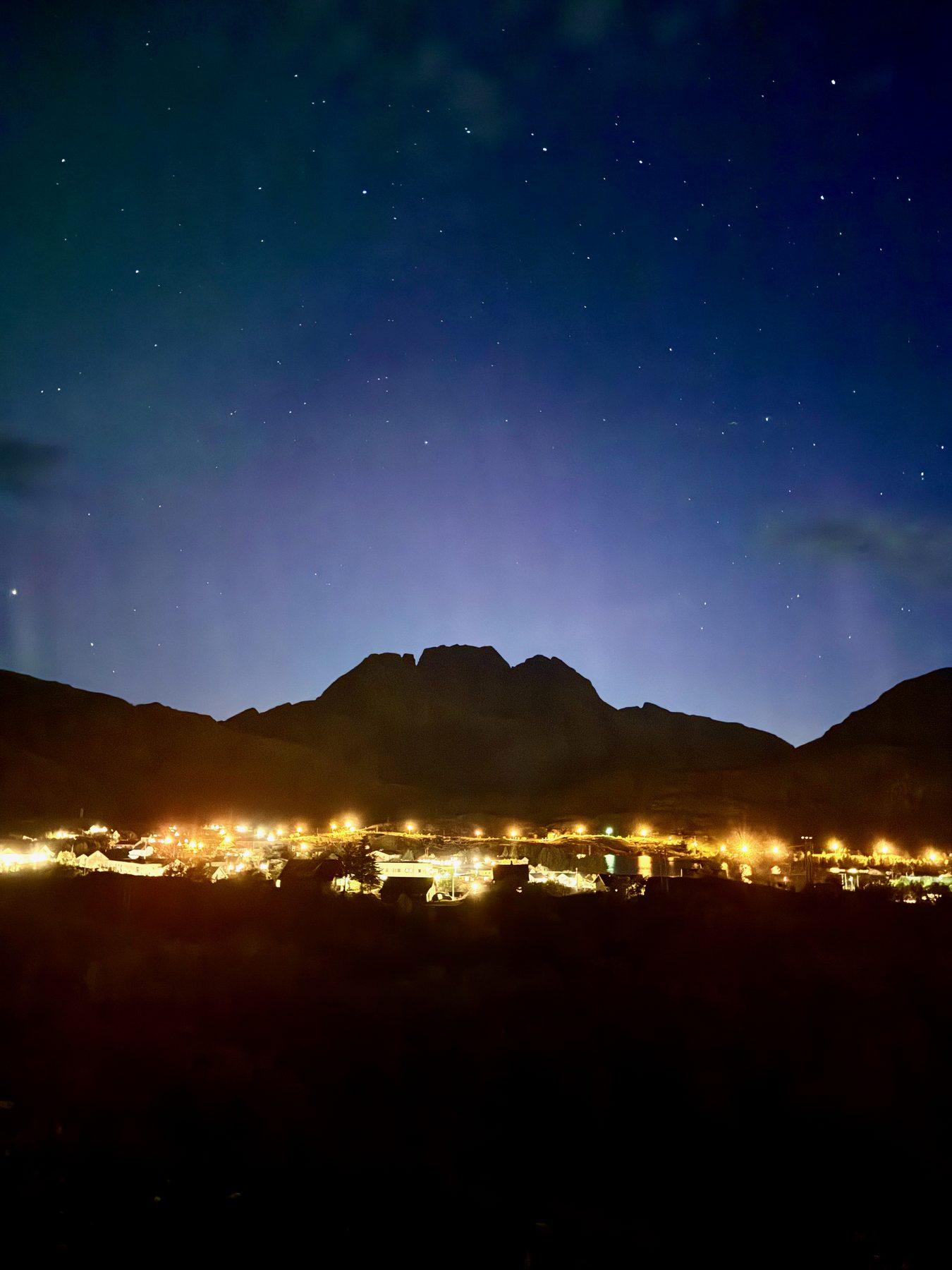
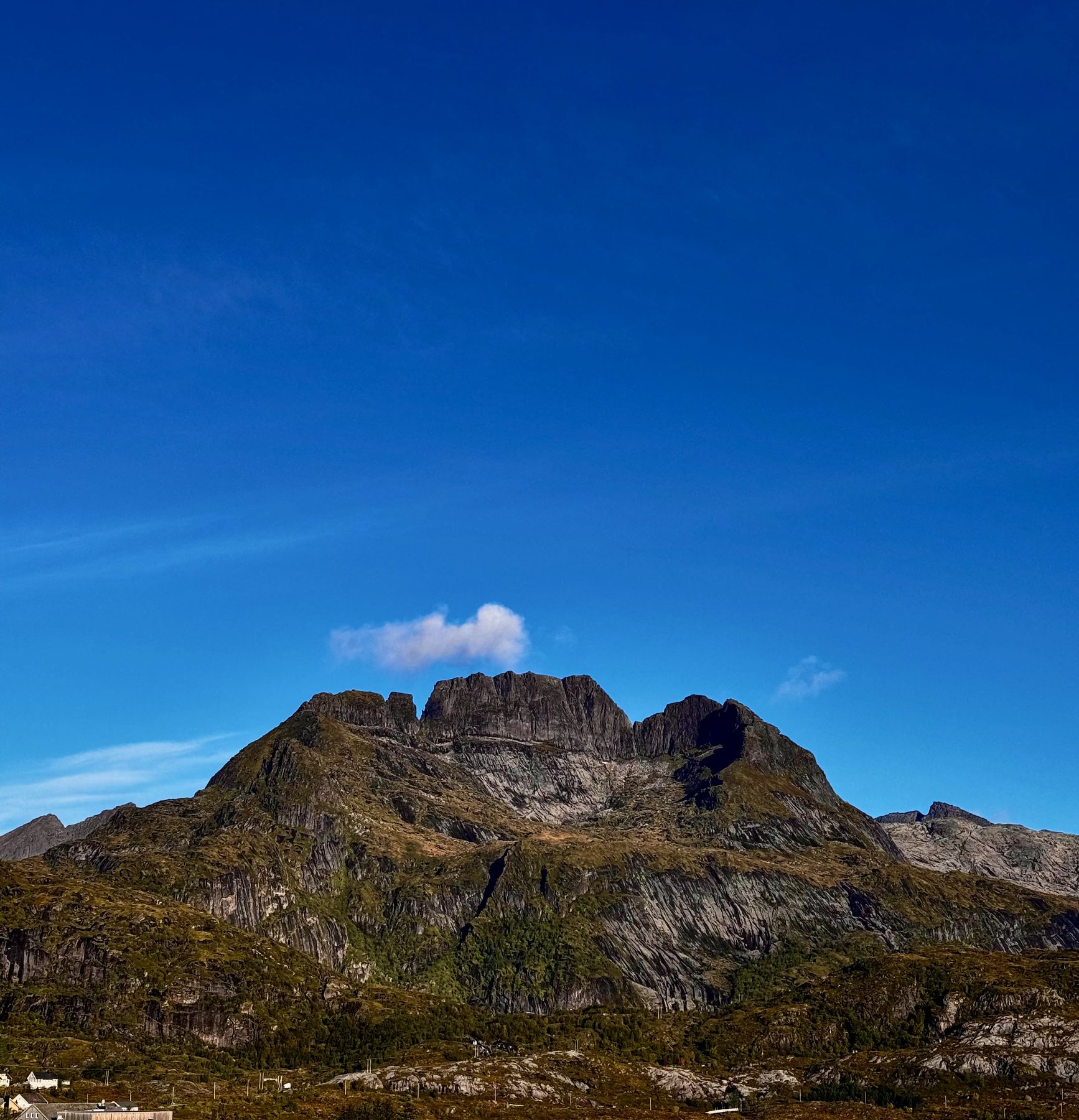
From our cabin in Sørvågen, we have always seen Støvla lying like an unyielding monument and a dream to challenge. The mountain has been part of the view, whether we stepped out with our morning coffee or returned after long hikes in the fresh Lofoten air. Sometimes covered in snow, sometimes bathed in golden November sun, and on special winter evenings the northern lights have danced around its distinctive profile — an unmistakable symbol of all the raw beauty Lofoten holds.
The night before, and the good advice
The climb had been on our must-do list ever since the cabin became ours in 2022. But Støvla does not give away its summit to just anyone — snow and weather make for short windows. So when the chance finally came, we talked with Øivind Arntzen, one of our local friends and well versed in Sørvågen's mountains. He offered good tips, told us about ropes and ladders, and made clear the hike could take up to four hours each way. Not a trip for the impatient or inexperienced.
An early start and September magic
We had our morning coffee early. The September sun had already begun to warm, and with packs ready we set off on the first metres of ascent — nearly 1000 would be climbed before the summit. After an hour of easy terrain, it really begins. At times we crawled up the slope to the sound of a small stream running down the smooth mountainside. After another half hour we reached what is called Understøvla.
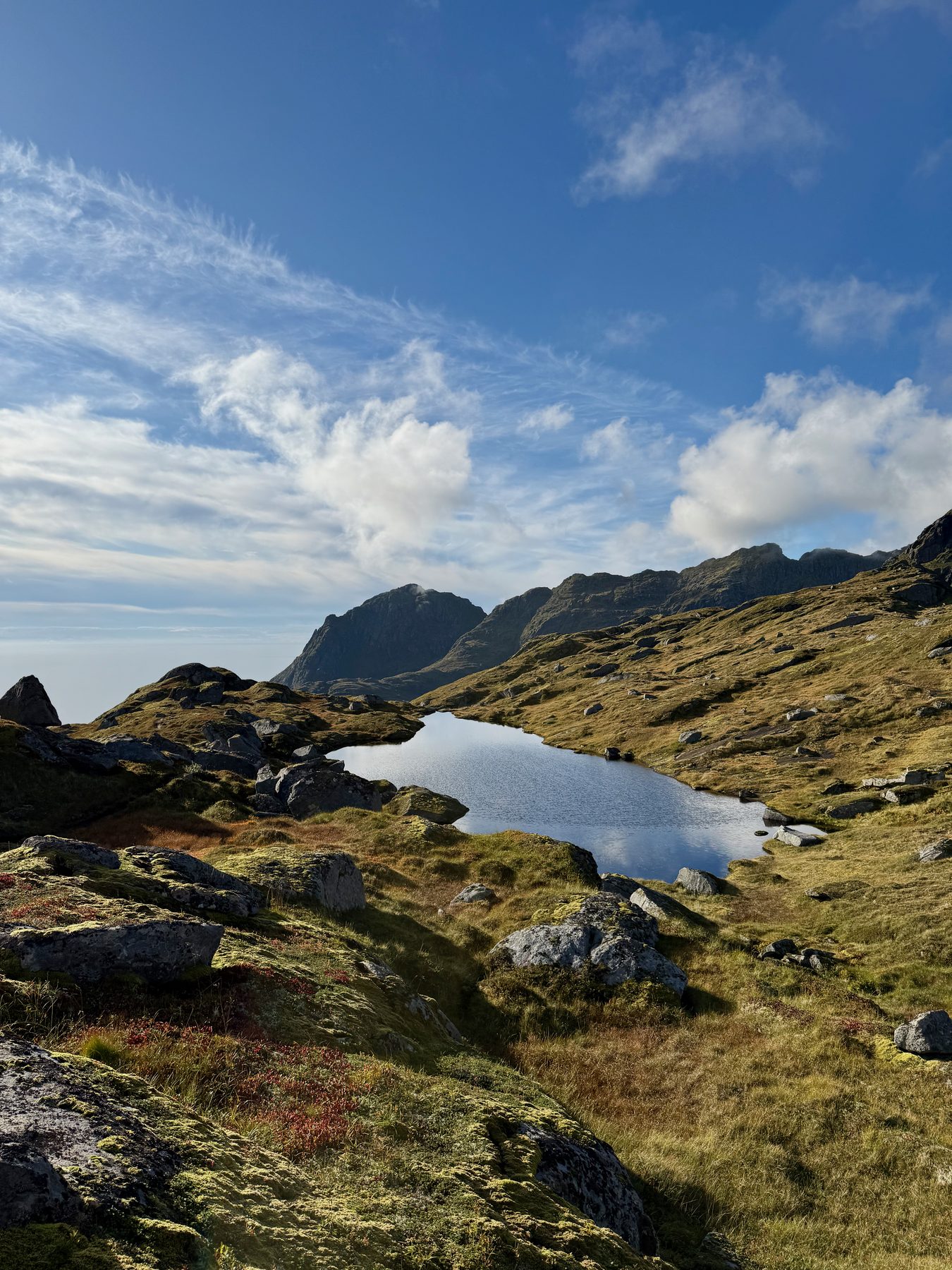
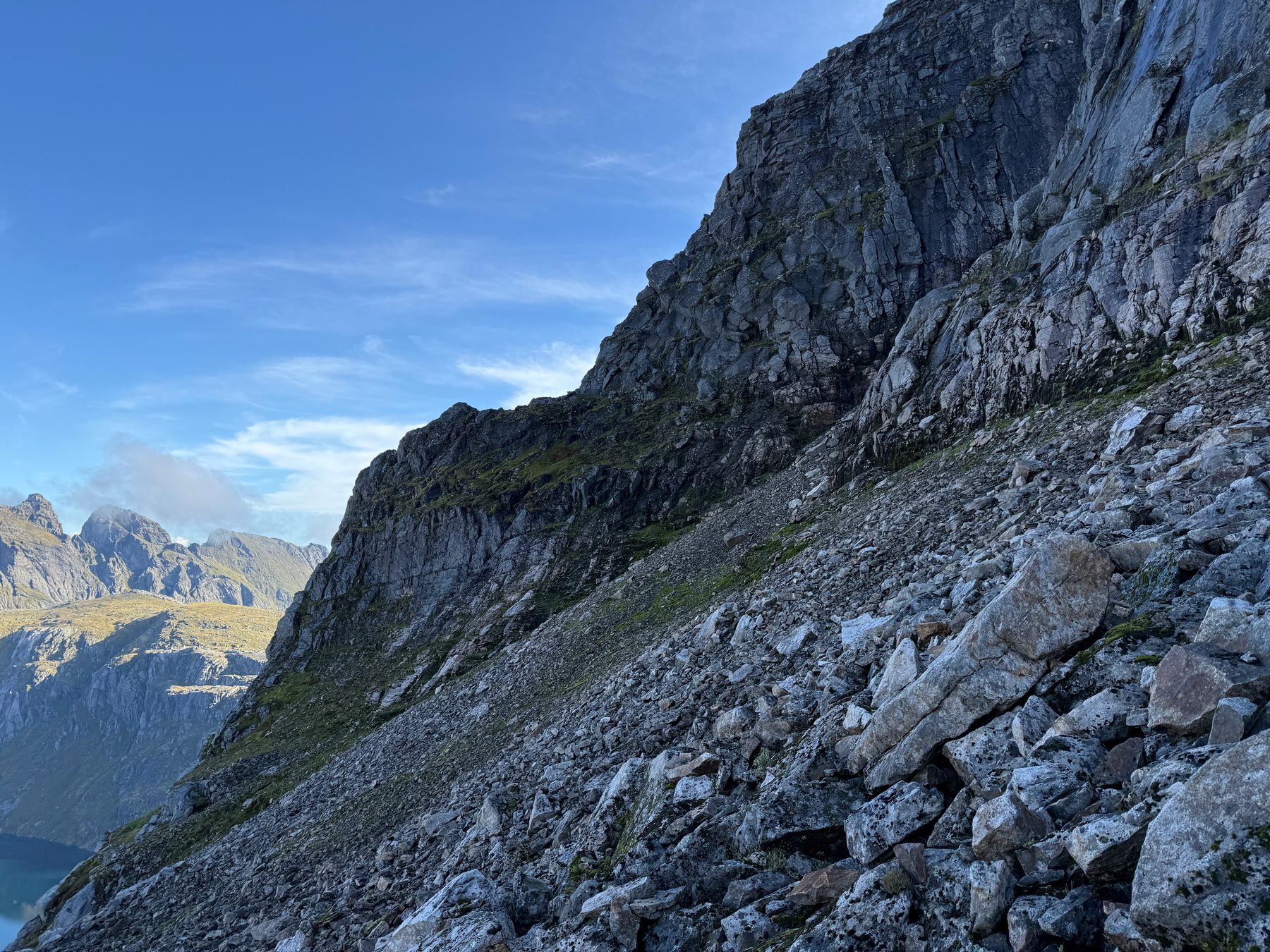
We continued north-east until we looked down on Fjerddalsvatnet. Time again for more ascent, and now it truly begins. No trail, no markings. Here it's all exploration, local knowledge and a good phone signal — especially when we suddenly stood in the middle of a boulder field unsure of the way on. Øivind's phone gave the answer: due west and up, through areas of loose rock, around boulders and sections that barely looked passable. The phone was no help when we had to rope down 20–30 metres and find footing on the slippery rock face.
Nature's own rules
Lofoten gives and takes. As we climbed, we suddenly heard the sound of rockfall filling the valley. Not right beside us, but a reminder that out here nature's own laws apply. Man is a guest, not a ruler. The last metres were a slog over rock and gravel, and our legs threatened to strike. But then, after four hours and 8.5 km of boulders, the cairn and Støvla's very highest point appeared, 824 metres above the sea — first shrouded in cloud, then suddenly in clear autumn sun.
A view for ever
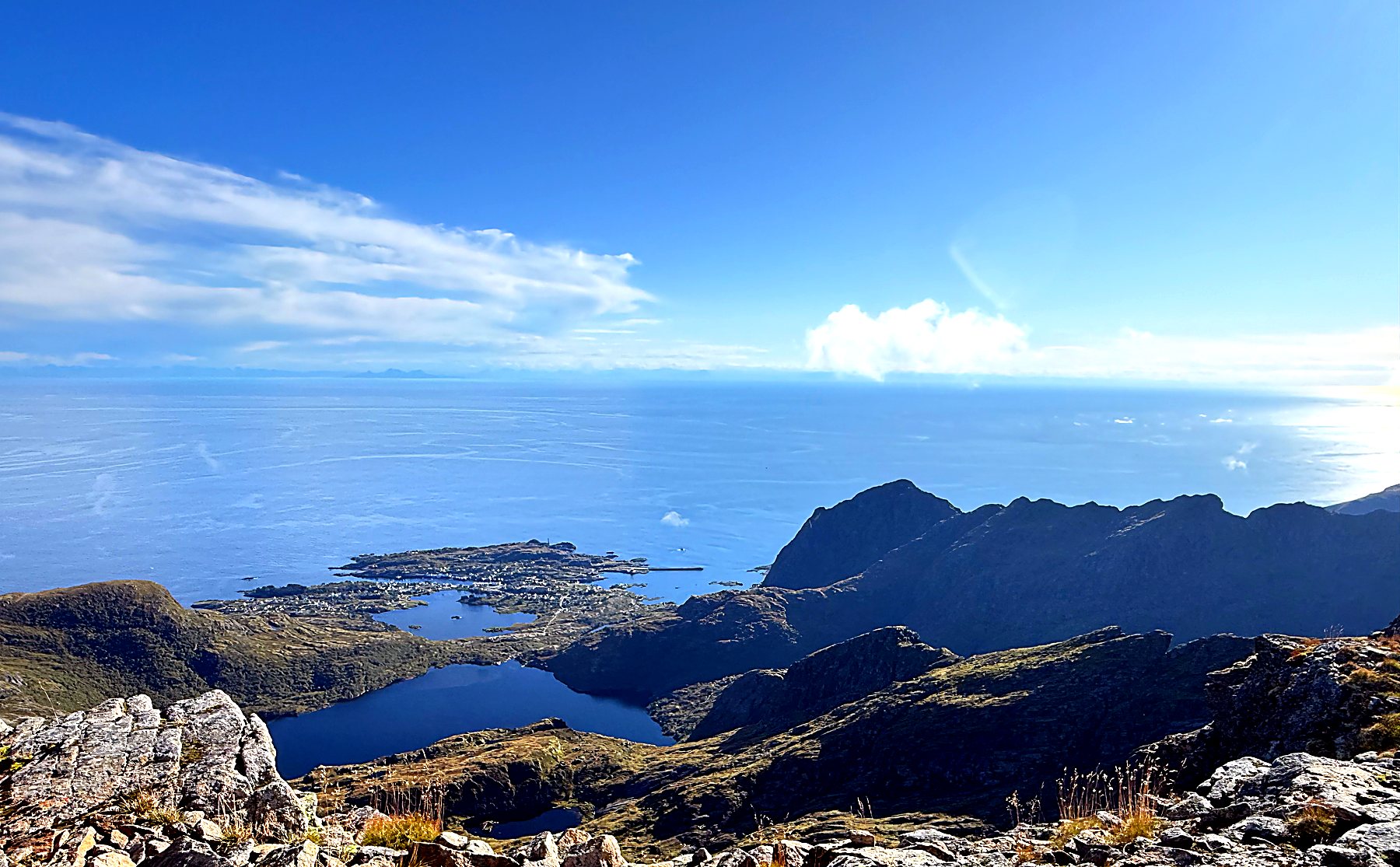
The view from the top is not something you forget. Sea in every direction. Vindstad at the head of Reinefjorden, Henningsvær far out, and Værøy and Røst on the horizon. Lunch tasted twice as good and the photos were many. But we were only halfway — the descent awaited, and the mountain does not give away victory easily.
On the way down — and a new view of our own feat
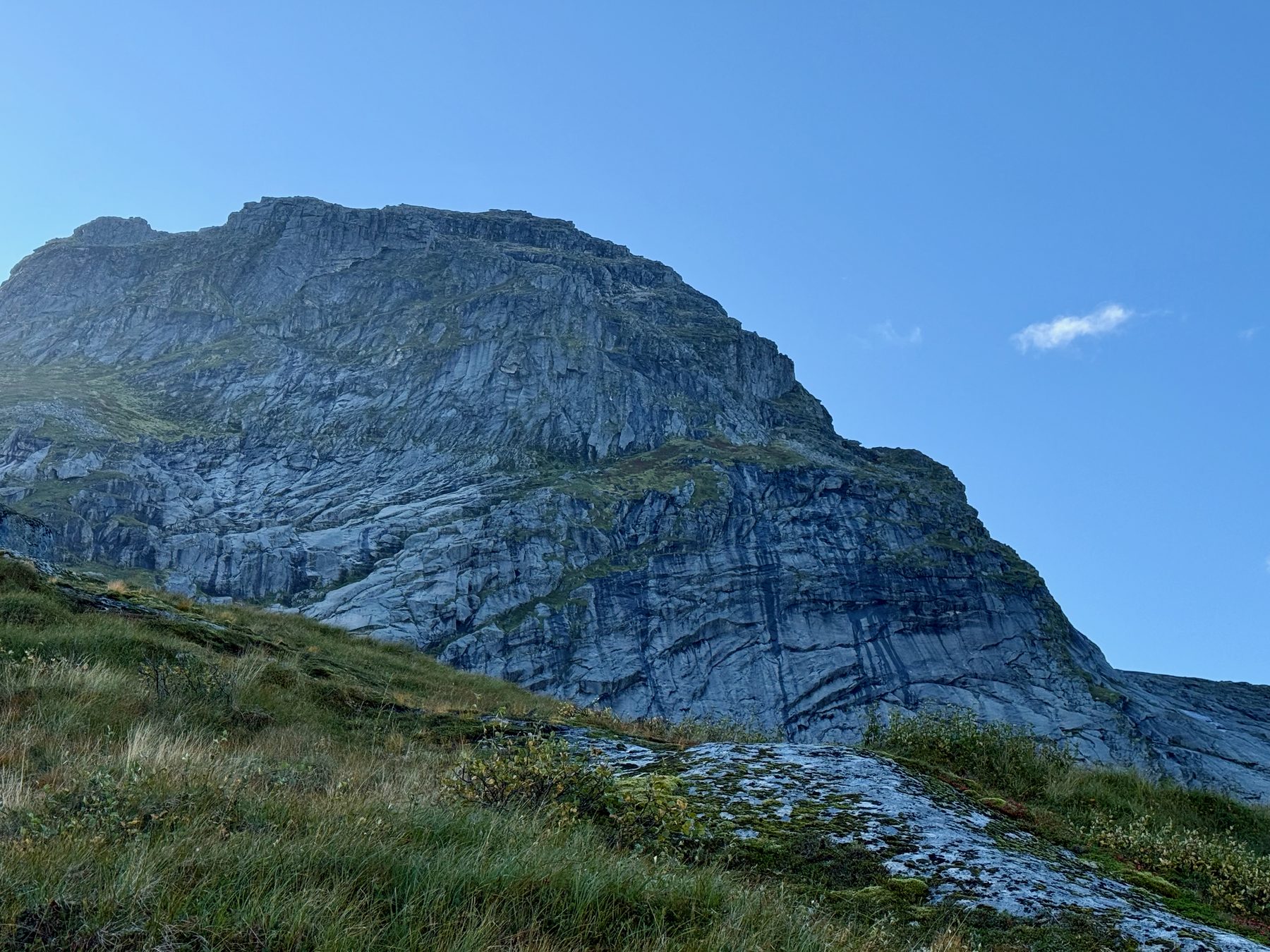
The descent was no easier than the climb — just as high a pulse, for a different reason. Several times we had to stop and wonder how we'd get on, but we found the way and mastered the challenges. When we came down and could survey the route we'd taken, it was almost hard to believe. After a refreshing swim in Sørvågvannet we could conclude: this was our most demanding summit hike yet.
An extra thank you to Øivind Arntzen for good advice and tips — without him the trip would not have been as good. This experience has burned itself in, not only into our legs but into memory. Støvla is no longer just a peak we see from the cabin — a dream has been fulfilled.